

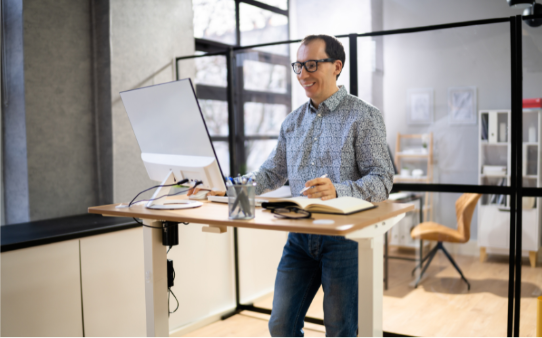
Maintaining a professional corporate environment, employee comfort, and productivity all depend on selecting the appropriate office furniture. Whether you operate a corporate firm, a creative agency, or a start-up, your choice of furniture should align with your business type, culture, and operational needs. After all, optimising your office layout and choosing the right furniture will provide your company a competitive edge amidst the cutthroat industry.
Discover how to select office furniture based on business type, with particular attention to trends such as the electric standing desk and other ergonomic solutions available in the market for office furniture in Singapore.
Corporate Offices: Prioritising Professionalism and Functionality
Office furniture in corporate settings, such as law firms, financial institutions, and consultancy agencies, must reflect professionalism and functionality. Traditional executive desks, ergonomic chairs, and ample storage are necessary to support structured work environments. High-quality desks and boardroom tables with minimalistic, clean designs help project authority and trust. Modular desk systems for individual workstations work best to support open-plan layouts while maintaining a professional aesthetic. Companies should also consider integrating ergonomic furniture to promote healthier working conditions. These pieces offer flexibility for long working hours and align well with the evolving needs of corporate employees who value both form and function.
Creative Agencies: Flexible, Collaborative Layouts
Creative agencies, including advertising firms, design studios, and media companies, require office furniture that encourages collaboration and creativity. These businesses benefit from open spaces with versatile furniture that can be easily reconfigured. Standing desks, mobile tables, and soft seating areas help create an informal yet productive atmosphere. In particular, standing tables in Singapore are growing among creative teams that want flexible options for brainstorming and informal meetings. Sit-stand desks can also be integrated into shared workstations to accommodate different working styles. Furniture should be visually appealing but functional, supporting solo tasks and team collaboration. Colour, material, and design consistency also play a role in maintaining the brand identity within the workspace.
Tech Start-ups: Ergonomics and Space Efficiency
Start-ups and tech companies often operate in limited spaces with rapidly evolving team structures. As such, their office furniture needs to be scalable, ergonomic, and space-efficient. Modular desks, shared benching systems, and hot-desking furniture allow teams to expand and contract without major disruptions. Ergonomics should be a priority, especially for teams that spend long hours coding or developing products. Standing desks are highly recommended for these settings due to their adaptability and health benefits. Investing in ergonomic chairs, cable management systems, and height-adjustable desks supports employee well-being and productivity. Choosing compact but functional furniture also allows start-ups to make better use of limited office space while maintaining a professional and modern look.
Medical and Professional Services: Hygiene and Practicality
Clinics, dental offices, and other healthcare-related businesses have specific requirements. Furniture must be easy to clean, durable, and compliant with health and safety standards. Compact desks, patient seating, and height-adjustable workstations are essential. An electric standing desk can support administrative tasks in reception areas, allowing staff to alternate between sitting and standing during long shifts. A growing selection of antimicrobial and easy-to-maintain materials are also suitable for medical settings. These options help maintain a sterile environment while offering the functionality needed for administrative duties.
Retail and Customer-Facing Businesses: Comfort and First Impressions
Retail offices, real estate agencies, and other customer-facing businesses must consider client perception in their furniture selection. Reception areas, consultation desks, and meeting rooms should be outfitted with furniture that is both comfortable and visually appealing. Waiting areas with soft seating and clean, modern designs can improve the customer experience. Behind the scenes, staff should have access to ergonomic workstations such as standing tables. These allow employees to stay energised and attentive throughout the day, especially in high-traffic environments. Storage units, display shelves, and signage integration are also critical in customer-facing spaces, ensuring the workspace is organised and presentable at all times.
Conclusion
Aligning your workspace with operational requirements is ensured by choosing office furniture according to your business type. Electric standing desks and standing tables are among the many ergonomic and space-saving furniture options available to local businesses. You can establish an atmosphere that boosts output, upholds your brand, and promotes worker well-being by comprehending the particular needs of your sector and using useful furnishings options.
Contact Tableholic and stand up for a better work environment today!