

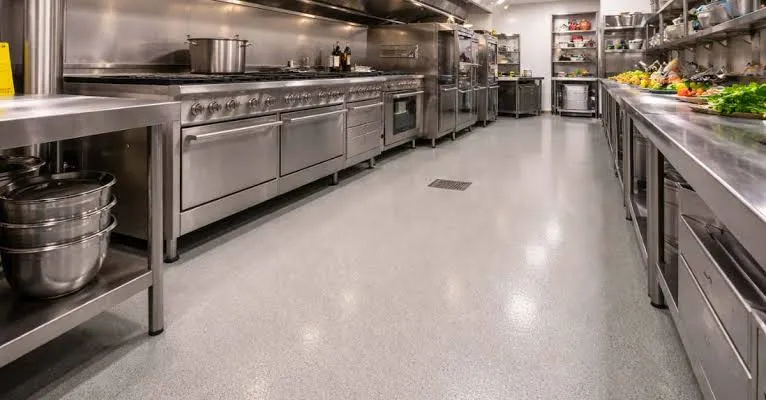
A restaurant kitchen operates under conditions that most ordinary floors are never designed to withstand. Hot cooking equipment, grease spills, repeated washing, and constant employee movement create daily challenges. Damaged tiles or deteriorating grout can make cleaning difficult while increasing maintenance concerns. Choosing suitable commercial kitchen epoxy floor coatings requires understanding these conditions before selecting a material. For restaurant owners across the San Francisco Bay Area, flooring decisions should support practical sanitation procedures, employee safety, and uninterrupted food preparation without introducing unnecessary maintenance complications.
Heat Creates Unexpected Flooring Challenges
Commercial kitchens experience considerable temperature variations throughout the day. Hot water, steam, cooking equipment, and refrigerated storage areas can expose floors to changing conditions. Some conventional coating systems may struggle with severe thermal shock, particularly where rapid temperature changes occur. Urethane cement is often considered for demanding environments because suitably specified systems can tolerate these conditions more effectively. However, performance varies by product and installation method. Restaurant owners should explain their cleaning temperatures and equipment requirements before deciding which flooring material is appropriate.
Poor Drainage Complicates Kitchen Cleaning
Standing water creates problems beyond an untidy appearance. It can interrupt cleaning routines, increase slipping risks, and expose damaged flooring to prolonged moisture. Commercial kitchens often need properly positioned drains and surfaces designed to direct liquids away from workstations. Where existing concrete has low spots, corrective preparation may be necessary before applying a new finish. Floor grading and coved transitions can also support cleaning by reducing areas where water and debris collect. Drainage design should account for existing plumbing and applicable local requirements rather than appearance alone.
Seamless Finishes Reduce Cleaning Obstacles
Traditional tiled floors contain grout lines that can become difficult to maintain when exposed to grease and frequent washing. Seamless resin systems reduce these joints, creating a more continuous surface for routine cleaning. However, proper sanitation still depends on suitable detergents, established procedures, and attention to damaged areas. Curved transitions between floors and walls can also make corners easier to access. These details matter particularly around food preparation benches, dishwashing stations, and storage areas where hygiene practices must remain consistent throughout demanding service periods.
Match Flooring Systems To Workflows
A restaurant’s cooking line, dishwashing area, and dry storage room do not face identical conditions. Hot washdowns may justify a different system from the one used in a relatively dry corridor. Businesses researching industrial floor coatings should recognize that heavy-duty performance does not automatically guarantee suitability for food preparation environments. Chemical exposure, temperature resistance, traction, and cleaning methods require separate evaluation. Matching each zone to its operational demands prevents unnecessary specifications while helping managers identify where additional protection is genuinely required.
Employee Movement Demands Suitable Traction
During busy service periods, kitchen employees frequently move between preparation stations while carrying ingredients, utensils, and hot equipment. Water, grease, and food residue can increase slipping hazards, especially on unsuitable surfaces. Textured finishes may improve traction, but excessive roughness can make cleaning more difficult. The appropriate balance depends on exposure conditions, footwear, and daily maintenance practices. Flooring should also work alongside effective drainage and prompt spill removal. No surface treatment can replace employee training or the consistent housekeeping required in professional kitchens.
Renovation Timing Affects Restaurant Operations
Replacing a kitchen floor involves more than applying a new protective layer. Existing materials may need removal, and the concrete beneath them can require repairs, grinding, or moisture assessment. Installation schedules must account for preparation, application, ventilation, and product-specific curing periods. Restaurant managers should discuss temporary equipment storage and access restrictions before scheduling work. Some projects can be organized around planned closures, while others require phased arrangements. Confirming reopening conditions in advance helps avoid rushing unfinished surfaces back into demanding daily use.
Maintenance Should Support Food Safety
A new floor still requires regular inspection and appropriate cleaning to remain suitable for its environment. Restaurant teams should understand which chemicals are compatible with the installed system and how concentrated spills should be handled. Areas around drains, equipment legs, and wall junctions deserve particular attention because damage may begin in frequently exposed locations. Written maintenance guidance helps staff follow consistent procedures across different shifts. Keeping records of repairs and unusual wear also provides useful information when evaluating the floor’s ongoing performance.
Conclusion
The condition of a restaurant kitchen floor can influence how efficiently employees clean, move, and maintain their working environment. Successful renovation planning begins with understanding temperature exposure, drainage requirements, and the realities of daily food preparation. Restaurant operators can explore specialized flooring options and discuss their facility requirements through rhynopoxy.com. Before approving a new installation, consider documenting the kitchen’s busiest cleaning cycle and identifying recurring problem areas. Those observations may reveal more about the right flooring specification than a showroom sample ever could.